
Glycerol: triol.
Glycerol testing at Vanguard Laboratory: identity, purity and quantity $250 per sample, with results in 3 to 5 business days.
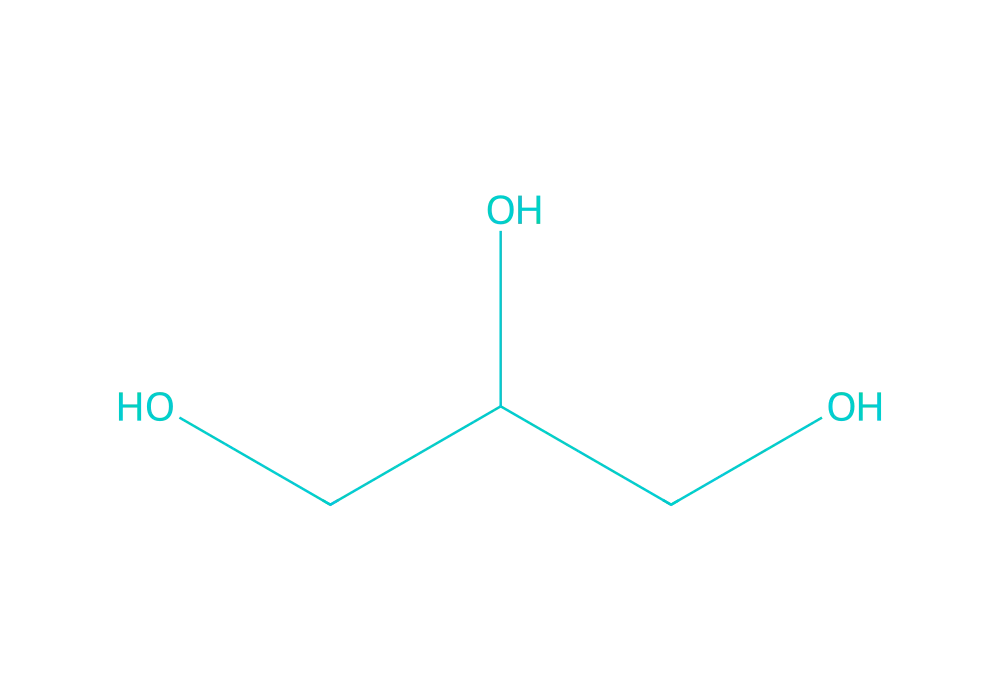
Glycerol: 2D structure drawn from the PubChem record (CID 753).
56-81-5
C3H8O3
92.09 g/mol (monoisotopic 92.05)
triol
IUPAC name: propane-1,2,3-triol
Other names: glycerin, HydroMax (trade name of a glycerol powder)
Identity, purity and quantity are measured against a reference standard by a chromatographic assay, with detection selected for the compound, $250 per sample with results in 3 to 5 business days. Finished products use the same approach, with sample preparation matched to the product.
Full testing to the USP Glycerin monograph is available and quoted; see USP monograph: Glycerin (glycerol) below.
$250
Chromatographic purity and mg per unit by the method matched to the compound, identity against a reference standard. 1 unit.
| Add-on test | Price |
|---|---|
| Identity and impurities | |
| FTIR identity | $90 |
| CHNS elemental analysis (carbon, hydrogen, nitrogen, sulfur) | $125 |
| Chiral purity (where a chiral method exists; new methods quoted) | $250 |
| Water, solvents and salt form | |
| Water content by Karl Fischer | $60 |
| Residual solvents | $150 |
| Counterions: chloride, acetate and TFA | $70 |
| Assay | |
| Assay, % w/w (with raw powder purity; $250 together) | +$50 |
| Metals and conformity | |
| Heavy metals: arsenic, cadmium, chromium, mercury and lead | $150 |
| Conformity: purity and quantity on more units from the same lot | $100 per extra unit |
10% off for 10 or more samples.
Need something else? Other tests are available on request.
Purity and quantity is $250 per sample (1 unit) and raw powder purity is $200 for 50 mg, with results in 3 to 5 business days. Send the material sealed and labeled, with the label claim and the form it contains.
By a chromatographic assay, with detection selected for the compound, against a glycerol reference standard; powdered glycerol products are reported as % glycerol against the label.
Yes. Capsules, powders, gummies and liquids are measured with sample preparation matched to the product, and reported in mg per serving or % w/w against the label.
No. The $250 test covers identity, purity and quantity against a reference standard. Full testing to the USP Glycerin monograph adds the monograph's own tests and is quoted.
The USP monograph covers identity by infrared spectroscopy and a diethylene glycol and ethylene glycol limit by chromatography, assay by titration, chloride, sulfate, residue on ignition, related compounds by chromatography, chlorinated compounds, fatty acids and esters by titration, color, specific gravity, and water content.
Forms and titles: Glycerin (CAS 56-81-5)
Diethylene glycol and ethylene glycol look and behave like glycerin and have been substituted for it in the past. They differ in mass and separate in the chromatographic test, which is why the check is part of identification.
Glycerin is a small polyol with no chromophore. It absorbs almost no UV light, so the lab uses a detection method suited to the compound.
Samples are a clear, thick liquid, from plant oils or made synthetically. It takes up water from air, so containers should be full and tightly closed, and water content is reported with the assay.
Send the product name, the form of the ingredient and the label claim for a quote, or submit a sample with the sample form.