Scientific Resources

Technical articles from Vanguard Laboratory on peptide and pharmaceutical analysis, chromatography and mass spectrometry, microbiology, food processing and certificate verification, indexed by subject.

Browse by subject

Choose a subject to jump to its articles.

Identity, purity, assay, counterions, impurities and degradation.

Browse articles

Certificates of analysis, sampling, investigations and result verification.

Browse articles

HPLC, LC-MS/MS, separations and compound characterization.

Browse articles

Sterility, endotoxins, bioburden, challenge studies and method suitability.

Browse articles

Process Authority, acidified and low-acid foods, and thermal processing.

Browse articles

Peptide & Pharmaceutical Analysis

Peptide Blends 101: What Is Actually in the Vial?
A label names two peptides. Did the test measure both? A plain-English guide to identity, purity, quantity and finished-blend testing.
A Depot Is More Than Its API
Why long-acting peptide quality takes more than one number: assay, particles, residual solvents, degradation, and release behavior answer different questions.
Only one of eighteen black-market retatrutide vials matched its label. The first published chemical analysis explains why that number should surprise you, and what it would take to actually verify one of these vials.
The Identity Problem: What IS BPC-157?
The FDA's advisory panel voted to recommend BPC-157 for compounding. But their own scientists raised a question that matters more than the vote itself: What IS BPC-157?
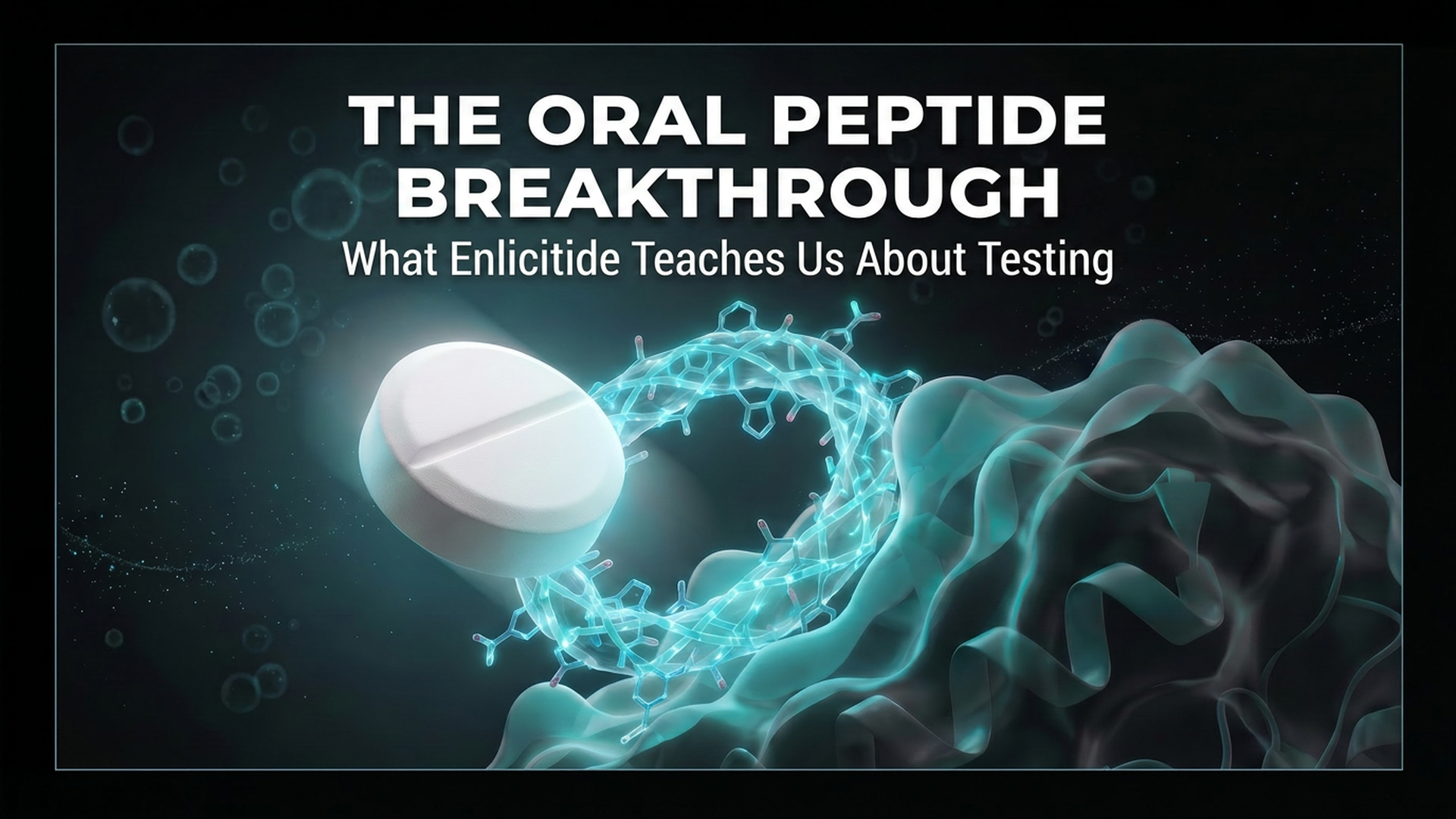
White tablet and luminous macrocyclic peptide approaching a protein surface, illustrating enlicitide and analytical testing
FDA’s approval of enlicitide, the first oral PCSK9 inhibitor, shows why macrocyclic peptide structure, formulation, and fit-for-purpose analytical testing must be interpreted as one connected system.
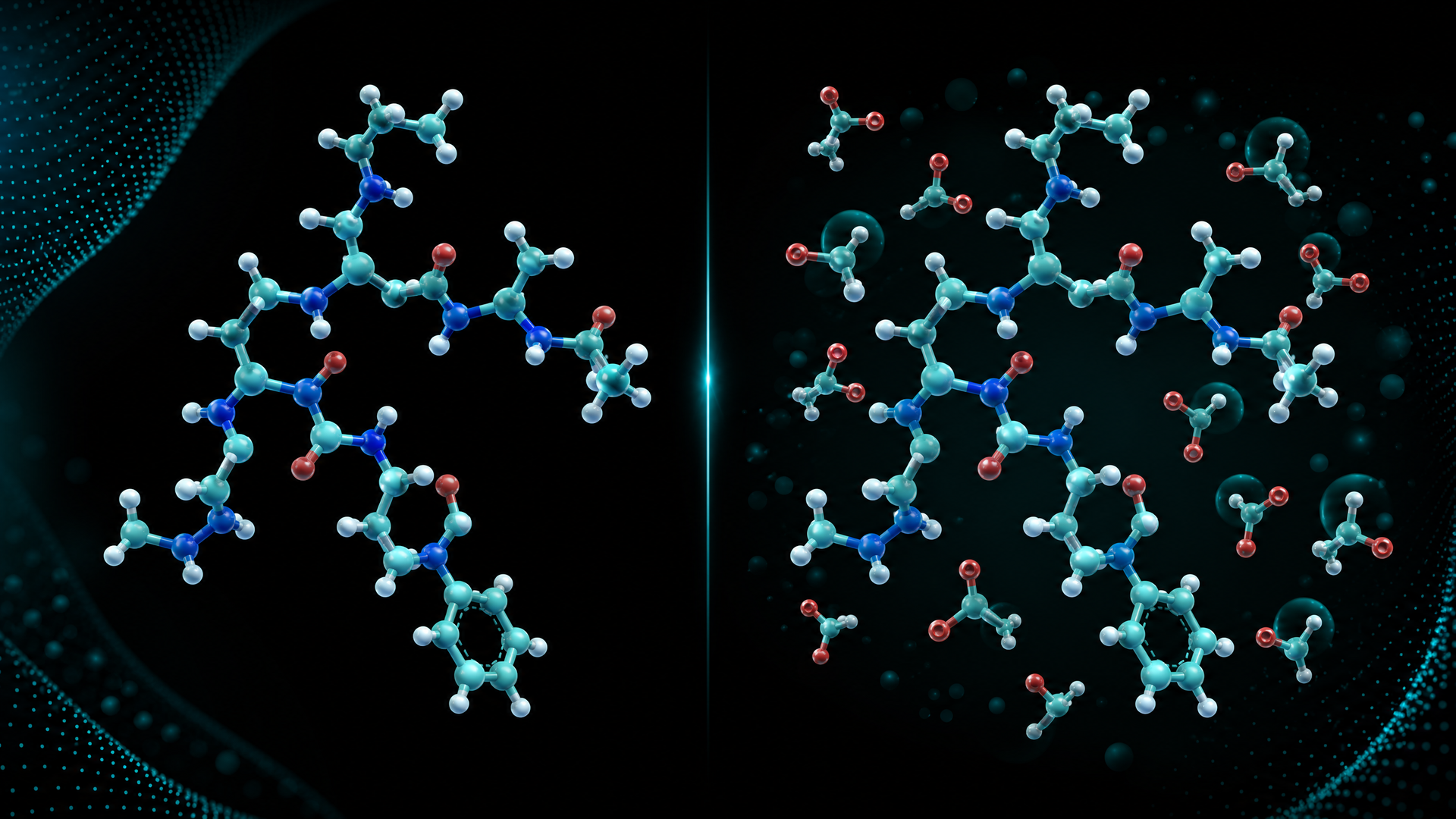
Side-by-side molecular models illustrating different chemical forms of the same peptide
FDA’s July 2026 peptide briefing documents expose a critical testing issue: a common peptide name may not identify its salt form, assay basis, or true peptide content.
Silicon Valley’s Unapproved ‘Godzilla’: The Retatrutide Phenomenon and the Testing Crisis It Created
Tech elites are injecting an unapproved triple agonist sourced from the grey market. Here's why that's an analytical nightmare, and what rigorous testing reveals.
The Gray Market’s Crypto Pipeline: From Fentanyl Precursors to Peptides
A bombshell Chainalysis report reveals the $100 million crypto pipeline fueling gray-market peptides and its alarming connection to fentanyl precursor manufacturers. Here's what the collapse of independent testing means for consumer safety.
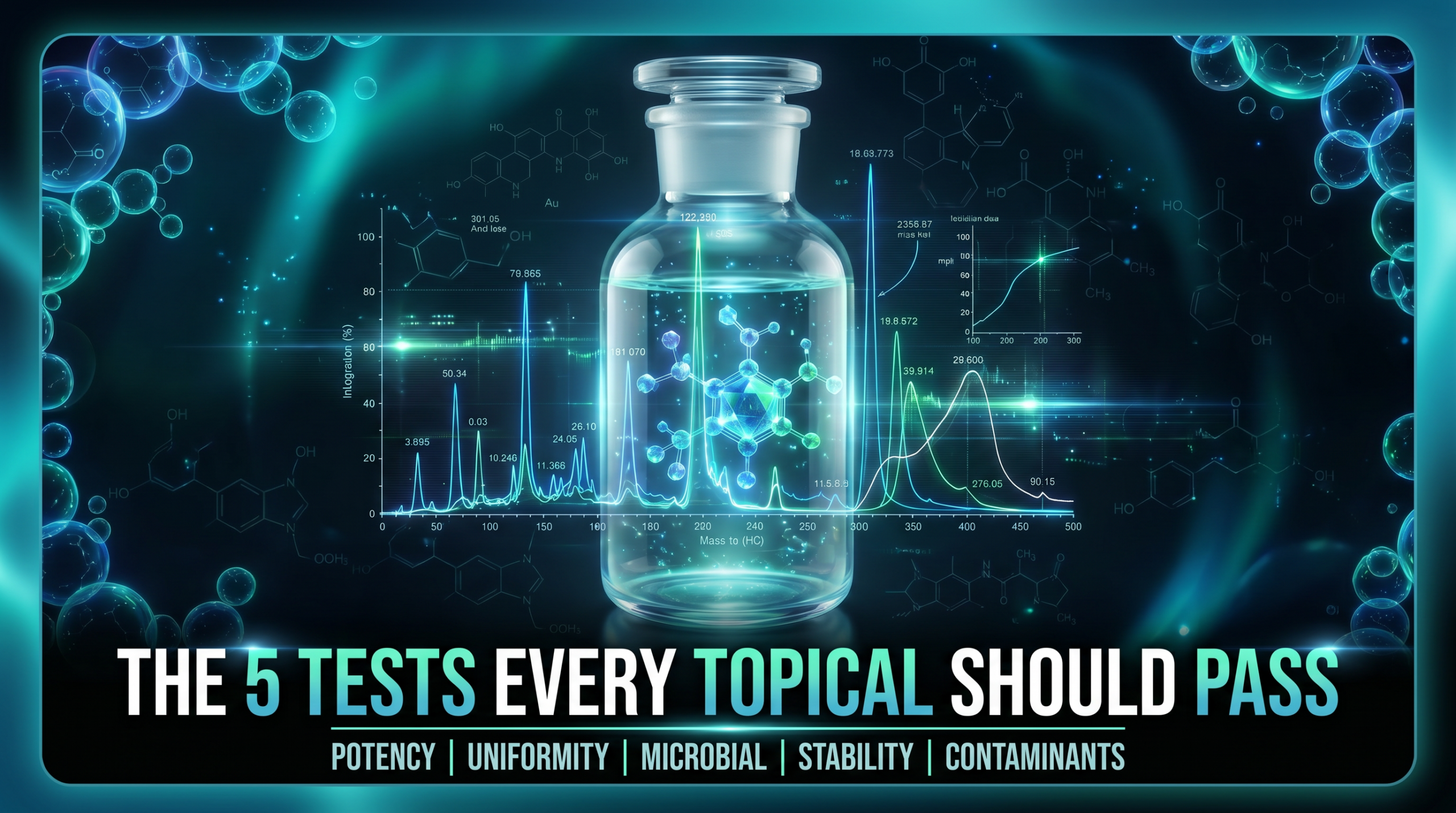
What’s Actually In Your Cream? The 5 Tests Every Topical Should Pass
A 2026 eczema cream recall traced to Staphylococcus aureus shows what can go wrong with topicals. The five tests every cream, lotion or serum should pass.
When States Draw the Line: The New Era of State-Level Peptide Enforcement
States are starting to enforce their own rules on peptide therapy. What the new state actions mean for clinics and why analytical verification matters.
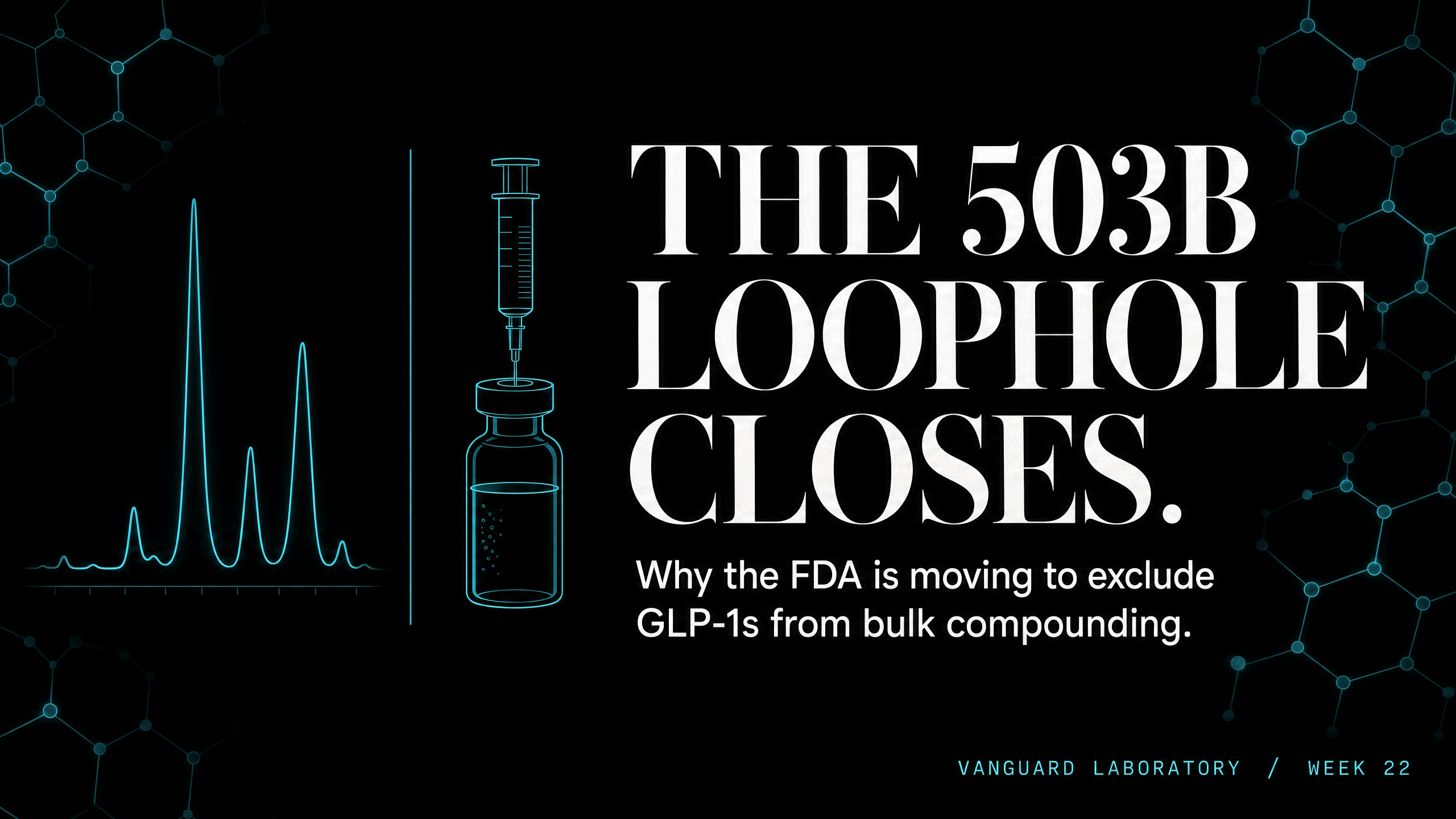
The 503B Loophole Closes: Why the FDA is Moving to Exclude GLP-1s from Bulk Compounding
On April 30, 2026, the FDA proposed permanently excluding semaglutide, tirzepatide, and liraglutide from the 503B bulks list. As legitimate compounding pathways narrow, independent analytical testing becomes the only reliable defense against substandard supply.
The Invisible Foundation: Why Your BAC Water Matters More Than You Think
When a peptide seems to fail, the bacteriostatic water is often the cause. Why the water you reconstitute with deserves testing too.
The Amazon Peptide Problem: Why Third-Party Testing Matters More Than Ever
A 2025 AP investigation found research peptides sold on Amazon, Walmart and Alibaba with little oversight. What it found and why third-party testing matters.
What Happens Inside Your Body When Purity Fails
A 98 or 99 percent purity number says nothing about what makes up the rest. What impurities can do in the body when purity falls short.

Laboratory Quality & COA Verification

One peptide name can hide very different supply chains. We explain what RUO labels, compounded products and U.S. manufacturing records can tell you, and how our testing helps you ask better questions.
The Letter Is About Copies - Vanguard Laboratory analysis of FDA Warning Letter 738238
Most coverage of FDA Warning Letter 738238 to Empower Pharmacy led with sterility. We read the full letter and walk through what it says about compounded copies of approved drugs.
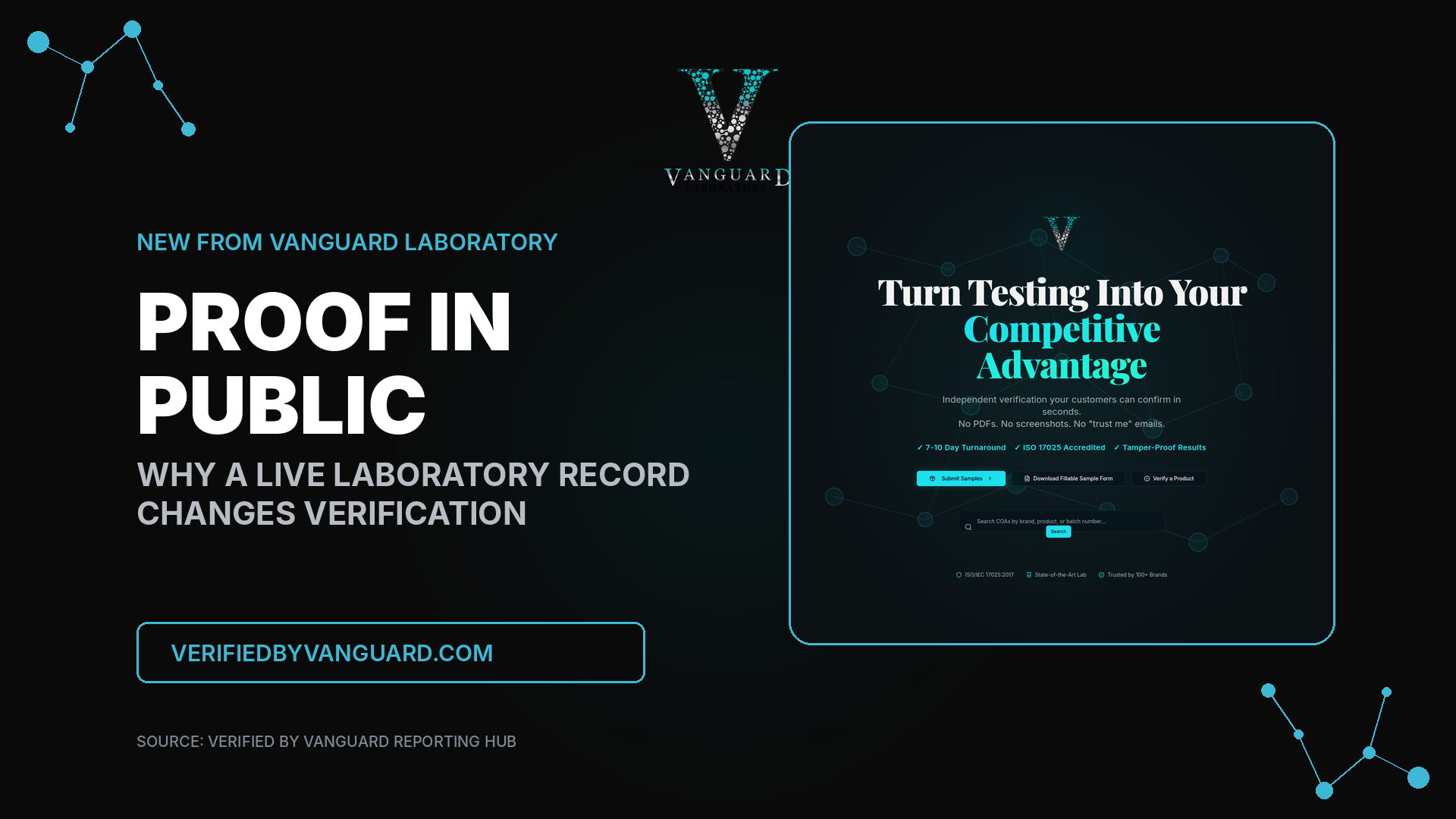
Verified by Vanguard portal displayed as the public source for laboratory result verification
Verified by Vanguard gives brands, clinics, quality teams, and customers a direct path to search the issuing laboratory's public record instead of relying on forwarded screenshots.
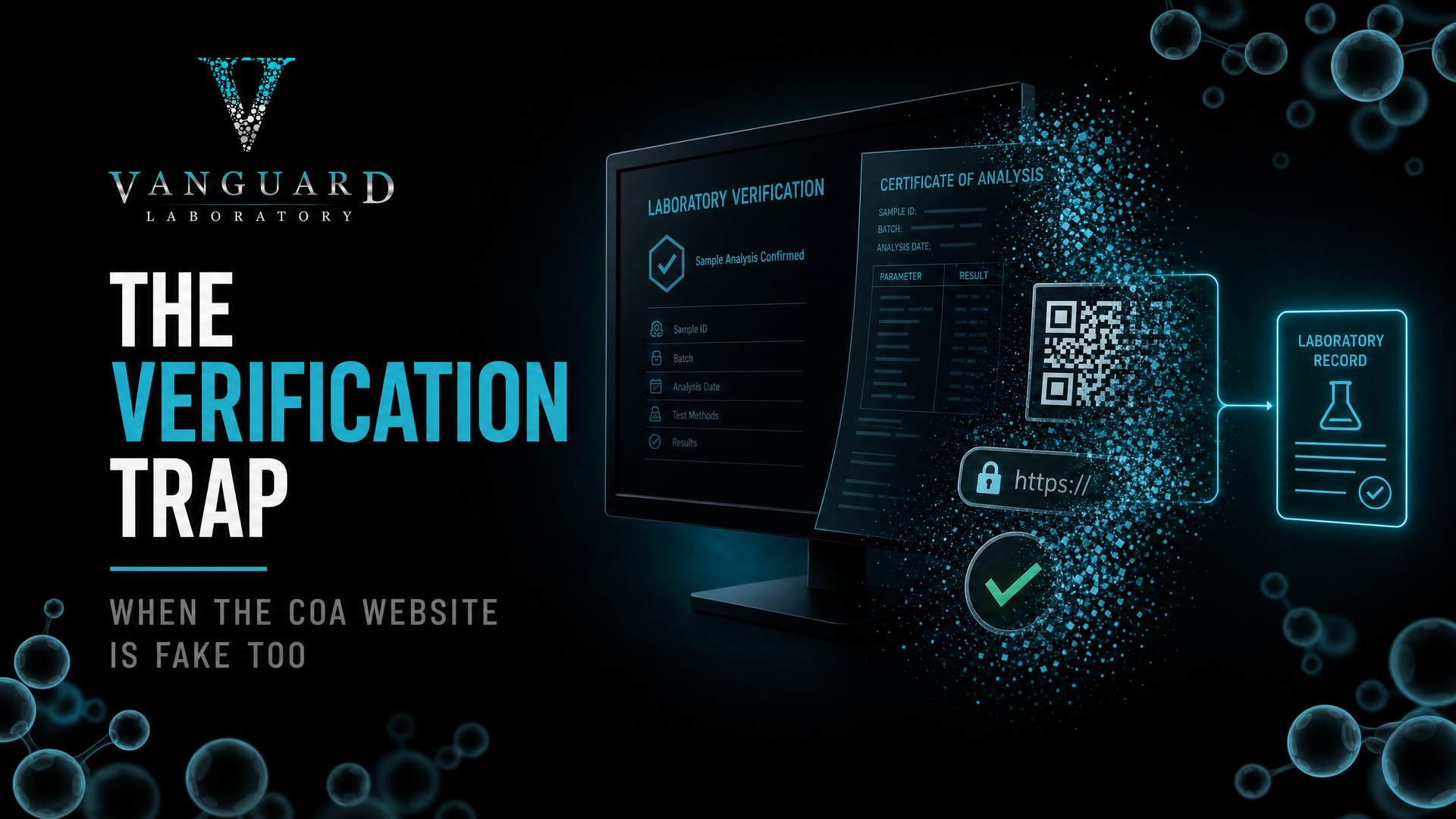
The Verification Trap: a laboratory CoA and verification website dissolving into data
A polished CoA, QR code, padlock, and verification page can still come from one unverified source. Learn how to authenticate a result at the issuing lab.
The Verdict Is In: 70 Months in Federal Prison for Forged Peptide Testing
A landmark federal prosecution exposes the dangers of forged Certificates of Analysis in the research peptide market. What the 70-month prison sentence means for the industry and why independent testing is the only path forward.
Even the most accurate lab can only test what you send. How the sample is chosen decides what the result can tell you about the batch.
When the Paper Lies: Exposing Fake CoAs in the Peptide Market
Peptides are now sold over the counter, and some of the certificates of analysis that come with them are forged. How fake COAs work and how to check one.
Retatrutide triple-agonist peptide analytical verification
Retatrutide is reaching U.S. buyers before it has been approved. Why it is one of the hardest peptides to verify and what a lab has to check.
The Relabeling Problem: When Your Peptide Vial Lies About Its Origin
Two major legal actions have exposed a massive vulnerability in the peptide supply chain. A Chinese manufacturer on the FDA Green List was caught relabeling semaglutide, and a Utah doctor was indicted for selling relabeled Chinese peptides to 200+ patients.
The “Wild West” Week: What 6 Major Outlets Got Right — and Wrong — About Peptide Quality
Six major publications ran peptide safety stories in five days. We read all of them, traced their claims back to the data, and found a more complicated picture than any single headline captured.
From Blueprint to Bottle: The Journey of a Vanguard-Verified Peptide
Follow BPC-157 from synthesis and purification through testing to see what it takes to produce a verified peptide.
Why a Single COA Doesn’t Tell You What You Actually Need to Know
A certificate of analysis shows how one batch tested on one day. Why batch-to-batch consistency takes more than a single COA.
What “Verified” Actually Means in the Research Peptide Industry (And Why Most CoAs Don’t Cut It Anymore)
A PDF from a vendor proves little on its own. What verified should mean for research peptides and how a public lab record changes it.

Chromatography & Mass Spectrometry

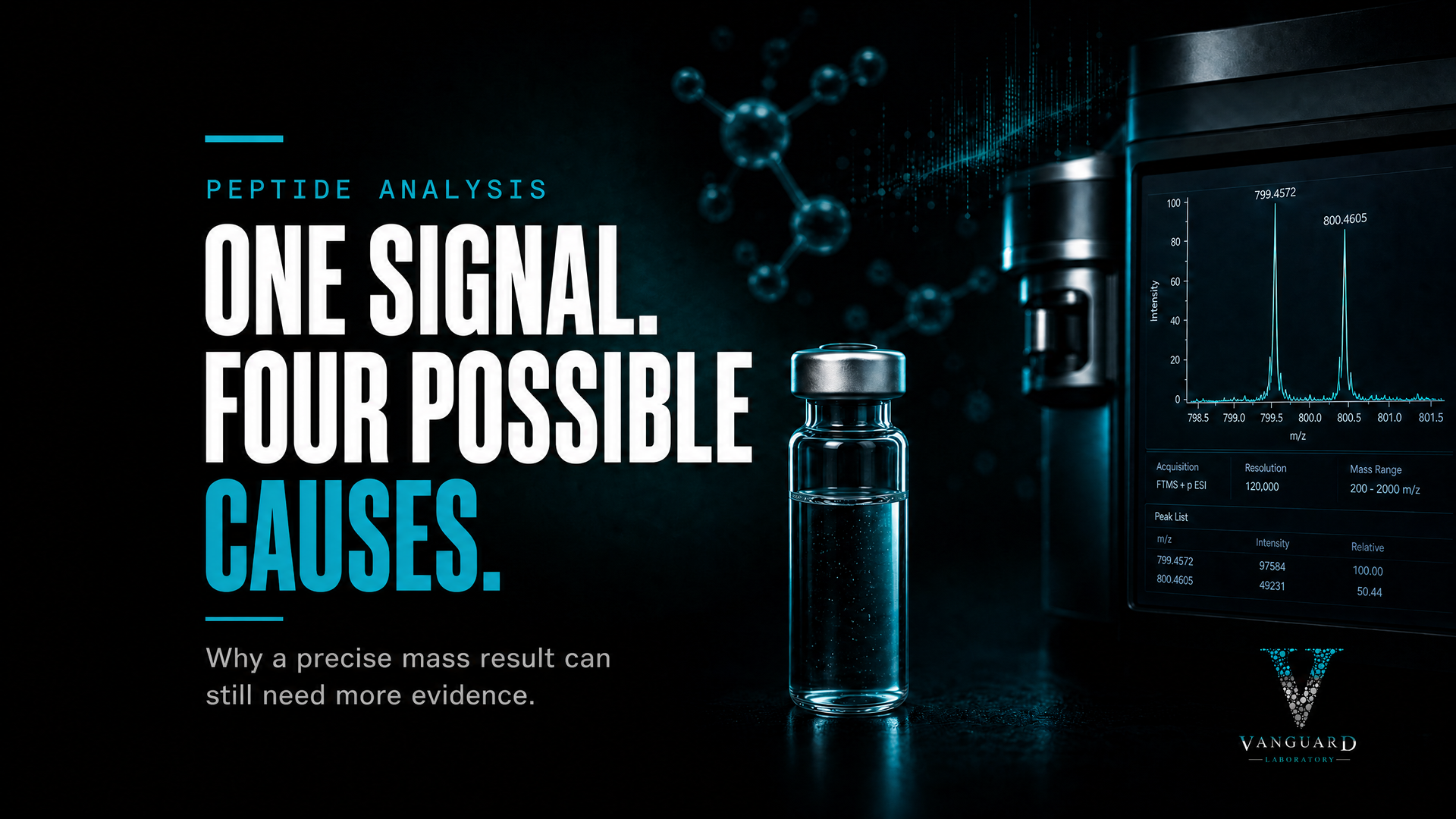
One Signal, Four Possible Causes: Why a Mass Result Is a Clue, Not a Verdict
A plain-English look at why one peptide mass signal can have multiple causes, and how chromatography plus high-resolution mass spectrometry separate a clue from a defensible identification.
98% Pure. So What Is the Other 2%?
98% pure is the most common claim in the peptide industry. But what is the other 2%? A peptide impurity investigation.
The Ultimate Guide to HPLC Testing for Peptides
A plain guide to HPLC testing for peptides: what the method measures and how to read the purity numbers on a certificate of analysis.

Microbiology, Sterility & Endotoxins

Endotoxins 101: What They Are, Why They Matter, and How We Test
A plain-English guide to bacterial endotoxins, how testing works, and what your result does and does not say.
The Recall Started Before the Final Vial: What Endotoxin Testing Reveals About Injectable Quality
A September 2026 recall shows why injectable quality begins with the incoming ingredient, and why sterility and endotoxin testing answer different questions.
Clear pharmaceutical vial with the words Sterile Is Not Safe
A licensed compounding pharmacy recalled three lots of an injectable peptide product on August 5 after its own testing found elevated bacterial endotoxin. The vials were almost certainly sterile. Here is why those two facts coexist, and what your Certificate of Analysis needs to say about endotoxin.

Food Processing & Regulatory Science

Black and teal Vanguard Laboratory editorial image showing a topical pump, serum droplet, cream swipe, and the title The Package Is Part of the Formula.
A topical formula is only finished in its final package. See how packaging, storage, use, and compatibility shape a defensible evaluation.
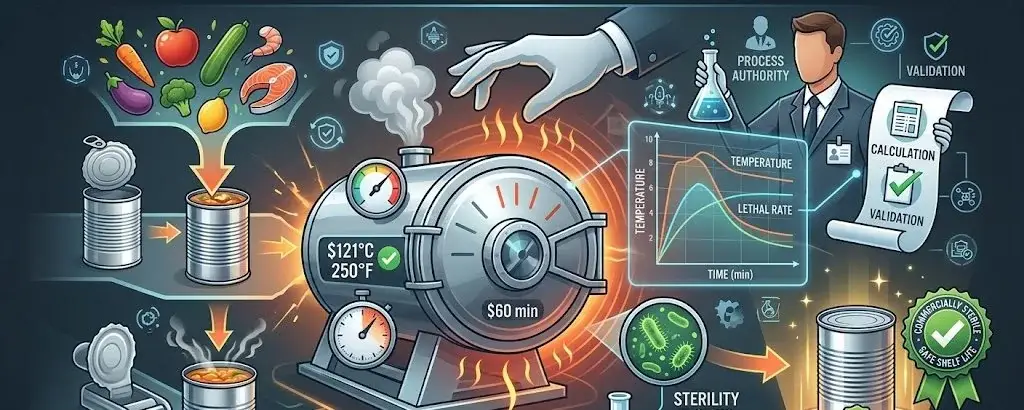
Illustration of a thermal process: food filled into cans, a retort at 121°C, a lethal rate graph, and a process authority signing off on validation
What a process authority evaluation should cover for a shelf-stable food or beverage: classifying the product, setting pH, water activity and thermal process limits, and backing FDA process filings and inspections.